Event

Four Arctic Flights with a Kubíček BB30Z

Arctic flight 1

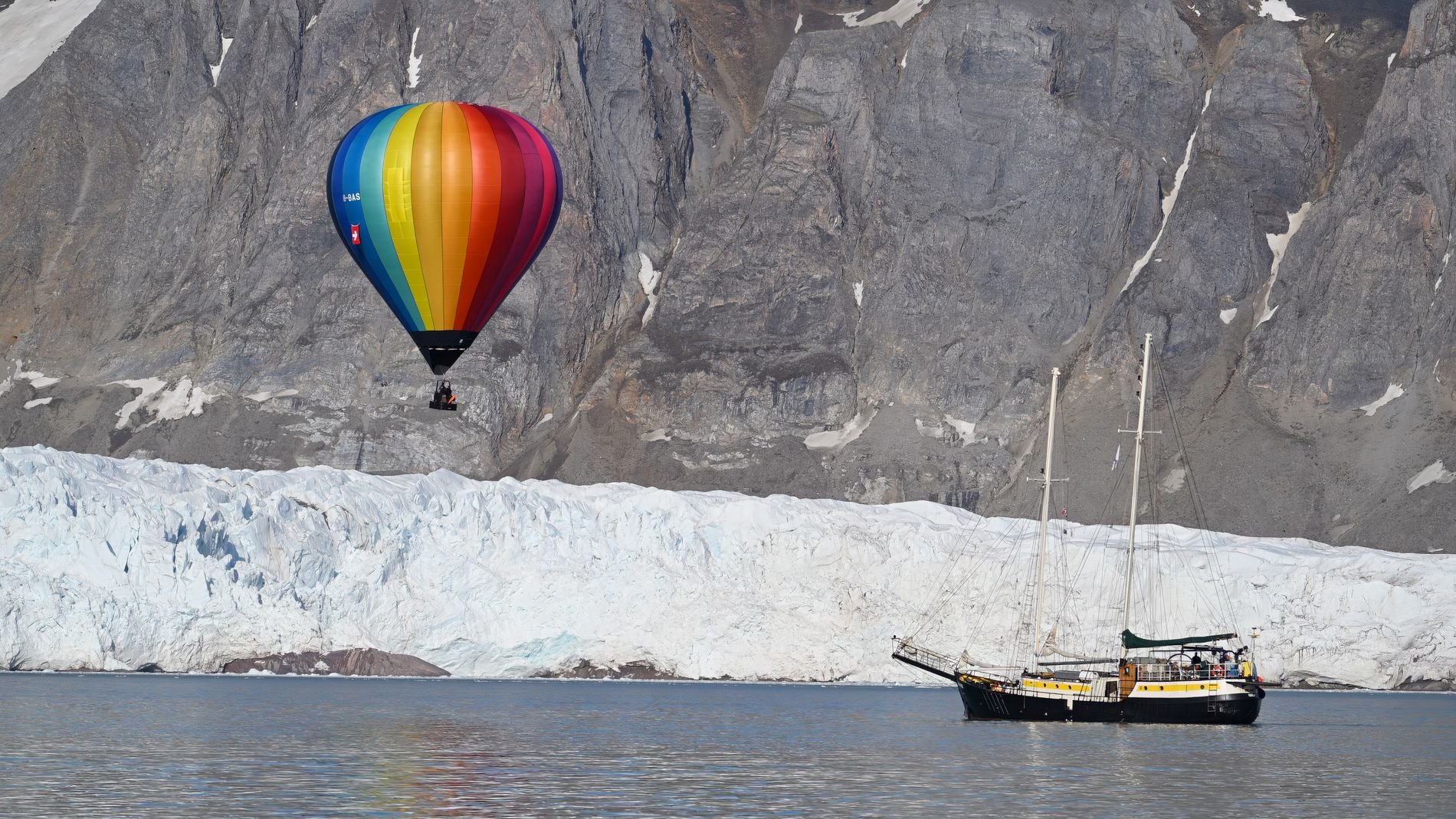
A Kubíček BB30Z with a Sirius burner and K-13C basket took on the Arctic during the 2026 Polar Expedition to Svalbard. Four flights, several water landings, glaciers, Zodiac recoveries, and true expedition ballooning put both the crew and equipment to the test.

A hot-air balloon, a sailing vessel, glaciers, freezing conditions, and several water landings. The 2026 Polar Expedition to Svalbard was far from an ordinary ballooning adventure.

At the center of the flying operation was a Kubíček BB30Z equipped with a Sirius burner and a K-13C basket, piloted by Astrid Gerhardt, Kubíček Balloons dealer for the Swiss market. Kubíček Balloons was proud to support the expedition as its technical partner.

Over the course of the expedition, the team completed four flights in one of the most remote and demanding environments balloonists can experience.

A Balloon Expedition Beyond the Road Network

The expedition, titled 2026 Polar Expedition Following Salomon Andrée’s Path, brought together pilots, scientists, photographers, filmmakers, and experienced Arctic professionals.

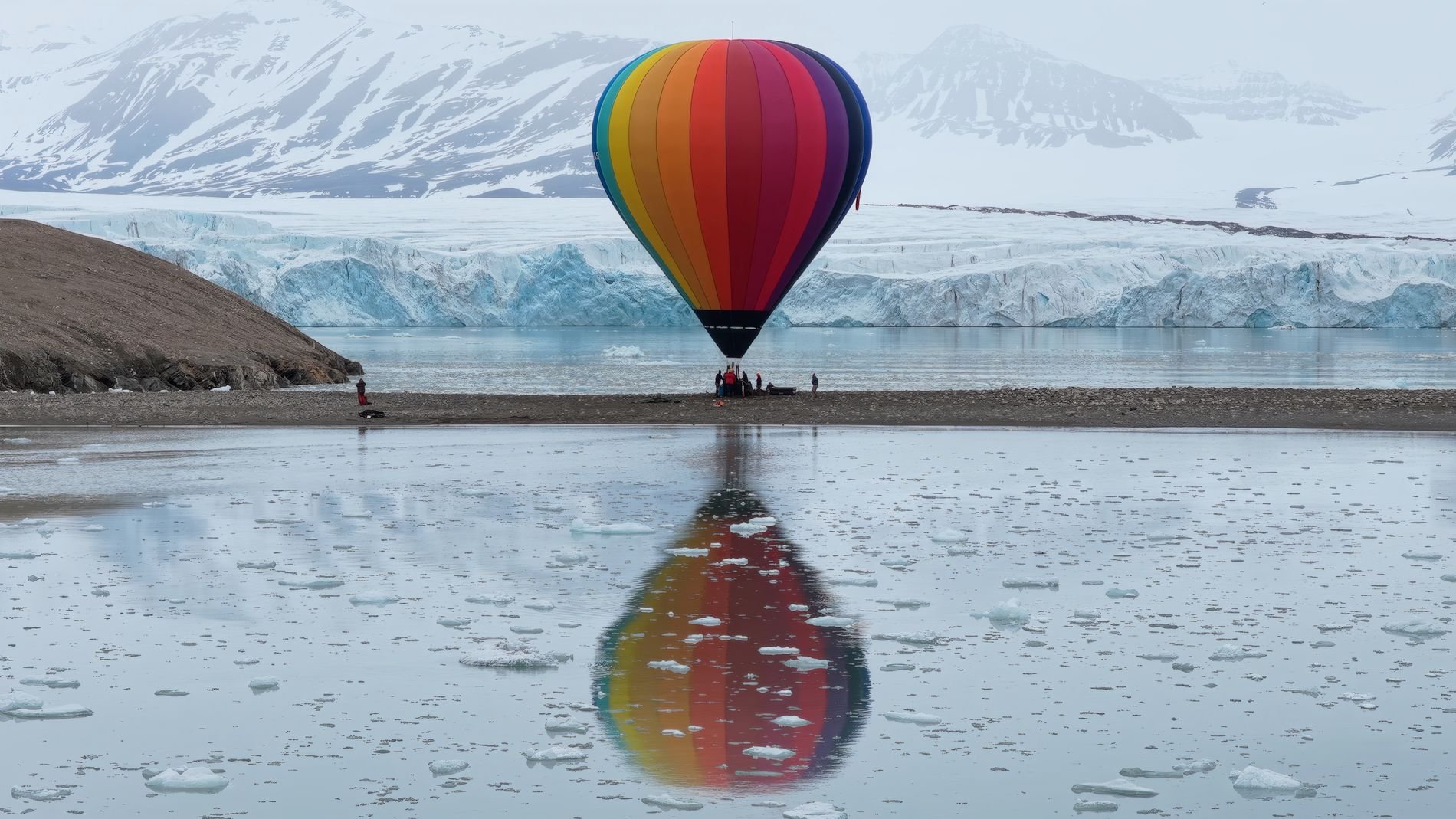
Their base was the historic two-masted vessel SV Meander, commanded by Captain Mario Czok. The ship transported the team between fjords, glaciers, and possible launch locations, while smaller boats were used to carry the balloon, fuel cylinders, instruments, and crew ashore.

There were no chase cars, no convenient launch fields, and no road network waiting below. Every flight depended on the wind, sea conditions, accessible shoreline, and the ability to recover the balloon safely after landing.

The K-13C basket proved particularly practical for this kind of expedition. Its compact size made handling the balloon equipment in small boats much easier and simplified transport between the ship and the launch sites.

Among the expedition members was Patrik Schmidle, one of the first Kubíček Balloons dealers, who played an important role in introducing our balloons to the international ballooning community during the early years of the brand.
Flying with an Arctic Guide

Experienced Arctic guide Rolf Stange accompanied the team both on land and in the air.

His role was essential. Before each launch, the area had to be checked not only for safe balloon operations but also for polar bears and other wildlife. He helped protect the crew while making sure the expedition itself did not disturb or endanger the animals.

In such an environment, selecting a launch site meant much more than finding enough room to lay out the envelope. The entire area had to be assessed carefully before inflation could even begin.

Four Hours Above the Arctic

The first flight took place near Ny-Ålesund. In the basket were Astrid Gerhardt, Rolf Stange, and scientist Alex Weitnauer.

The flight lasted approximately four hours, carrying the crew above the sea, mountains, glaciers, frozen landscapes, and rocky coastline of Svalbard.

Conditions were good enough for the team to continue flying successfully in an environment where weather windows can be short and suitable landing areas limited.

Further flights followed in the St. Jonsfjord area. Before departure, the team had considered two successful flights an optimistic result. They eventually completed four.

No Chase Car, Only a Zodiac

One of the defining aspects of the expedition was that water landings were part of the operation.

With little usable land available in some areas and no road network for conventional retrieval, the support team had to be ready to recover the balloon by boat. Several flights therefore ended with water landings, with the crew and equipment collected by Zodiac.

The team had trained for this possibility before the expedition, and the recovery procedures were an essential part of the planning.

For balloonists, this kind of operation demonstrates how important the entire team is. Piloting skills are only one part of the mission. Preparation, communication, recovery planning, and trust between the people in the basket, on the water, and aboard the support vessel are just as important.

Built for a Very Different Kind of Ballooning

During the flights, temperatures were generally around 0°C, but the expedition still exposed the balloon equipment to demanding Arctic conditions.

The coldest temperatures came during transport, when the equipment had to be moved through the Arctic environment before and between flights.

According to Astrid Gerhardt, the BB30Z, Sirius burner, and K-13C basket performed reliably throughout the expedition.

The challenges went well beyond temperature alone. Balloon equipment had to be repeatedly transferred between the ship, small boats, and shore, assembled in remote locations, flown over Arctic terrain, and recovered again without the infrastructure balloon crews normally rely on.

That combination made lightweight, practical, and dependable equipment especially valuable.

Ballooning with a Scientific Mission

The flights also carried scientific instruments used to collect data on water vapor in the Arctic atmosphere.

The remote location was ideal for this work because there was very little surrounding pollution that could influence the measurements. A balloon could carry the equipment to different altitudes without introducing nearby engine emissions.

Special permits were required for the flying and research activities, and the team trained for deep-snow landings, water landings, avalanche danger, emergency survival, and first aid in an area with no immediate access to medical support.

What Ballooning Is All About

The Svalbard expedition combined expert piloting, strong teamwork, technical preparation, and a willingness to adapt to conditions that could change at any moment.

It also showed what ballooning can achieve far beyond festivals, competitions, and passenger flights.

For us at Kubíček Balloons, being the technical partner of this expedition was especially meaningful. It brought together long-standing members of the Kubíček community, experienced pilots, Arctic professionals, and a balloon system designed to be practical, reliable, and easy to handle even in highly unusual operating conditions.

Four flights above glaciers and Arctic waters are a powerful reminder of what becomes possible when skilled people, dependable equipment, and a true spirit of adventure come together.

  • Arctic flight 1
  • Arctic flight 2